
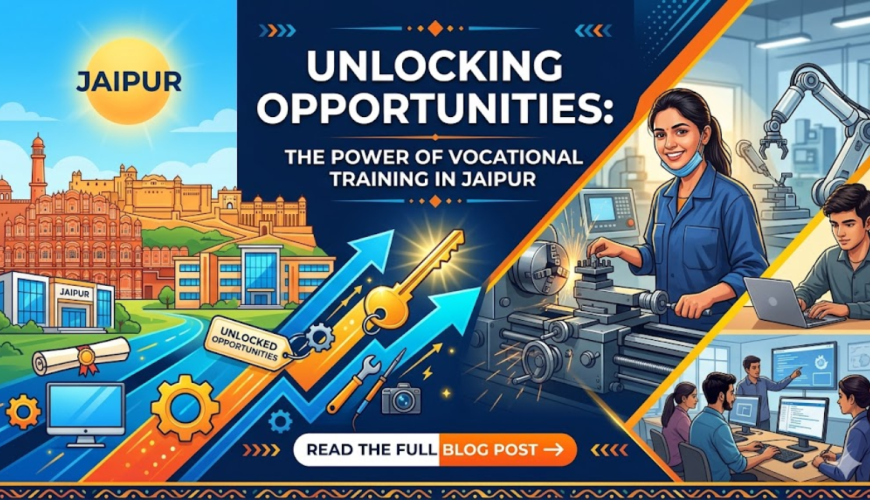
In the rapidly evolving economic landscape of the twenty-first century, the traditional metrics of academic success are undergoing a massive paradigm shift. For decades, the conventional wisdom dictated that a three- or four-year university degree was the solitary gateway to a stable, respected, and lucrative professional life. However, global market dynamics, technological disruptions, and the rapid automation of industrial processes have turned that old narrative on its head. Today, industries worldwide are facing a unique paradox: an abundance of highly educated graduates lacking specific practical capabilities, juxtaposed with a severe shortage of skilled, hands-on technical professionals.
This is precisely where vocational training, particularly through Industrial Training Institutes (ITIs), steps in to fill the void. Designed with a hyper-focus on practical execution, application-based learning, and immediate job readiness, vocational institutions have become the foundational bedrock of economic empowerment for millions of young aspirants. For students looking to navigate these waters in the capital city of Rajasthan, understanding the educational ecosystem is the crucial first step toward building a resilient, future-proof career.
The Macroeconomics of Technical Skill Development
To truly appreciate the value of technical training, one must look at the larger economic engine. Industrial growth is inherently dependent on a multi-tiered workforce. While engineers and administrators conceptualize projects, design frameworks, and manage corporate pipelines, it is the skilled technicians who execute these visions on the ground. Whether it is installing complex electrical grids, maintaining heavy automated machinery, setting up sensitive computerized control rooms, or repairing climate control systems, the operational continuity of multi-billion-dollar industries relies entirely on technical experts.
Governments across the globe, including India’s ambitious “Skill India” mission, have recognized that empowering youth with targeted, trade-specific capabilities is the most efficient method to combat unemployment and fuel the manufacturing sectors. By heavily investing in infrastructure, continually updating curricula to match contemporary industrial standards, and creating direct pipelines between training centers and manufacturing hubs, the vocational training ecosystem has evolved from a secondary alternative into a primary destination for career-oriented students.
Core Advantages of the Vocational Education Model
Enrolling in a structured technical training program offers an array of distinct benefits that traditional academic streams simply cannot replicate:
-
Immersive Practical Learning: Unlike standard college courses that rely heavily on textbook theories, lecture halls, and written examinations, vocational training takes place primarily inside workshops, advanced labs, and simulated industrial environments. Students spend up to 70% of their learning time physically interacting with tools, circuitry, machinery, and software, ensuring that their knowledge is deeply experiential.
-
Rapid Entry into the Job Market: Time is a precious asset. Traditional higher education demands a minimum commitment of three to five years before a student can actively enter the job market. In sharp contrast, technical training courses are structured to be lean, efficient, and intensive, spanning anywhere from six months to two years. This allows young individuals to attain financial independence much earlier in life.
-
Unrivaled Return on Investment (ROI): The escalating cost of university tuition has left millions of students burdened with substantial debt before they even secure their first paycheck. Technical training institutes maintain highly accessible fee structures, making quality professional training affordable for families across all socio-economic strata. The minimal capital investment, coupled with immediate placement opportunities, creates an incomparable financial trajectory.
-
Global Mobility and Standardized Certification: Modern technical curricula are strictly aligned with national and international occupational standards. Systems like the National Council for Vocational Training (NCVT) ensure that the credentials earned by a student are universally recognized, opening up vast career horizons not just within domestic borders but across global industrial hubs, particularly in Western Europe, the Middle East, and Southeast Asia.
Comprehensive Analysis of High-Demand Technical Trades
The vocational ecosystem offers a diverse array of engineering and non-engineering trades designed to cater to varying aptitudes, interests, and industry requirements. Selecting the appropriate specialization is a decision that requires a thorough understanding of contemporary market demands.
1. Electrician (Engineering Trade)
The Electrician trade remains an eternal favorite and arguably one of the most versatile specializations available. Electricity is the lifeblood of modern civilization, and the demand for professionals who can safely navigate high-voltage equipment, industrial wiring, and residential power distribution is absolute.
-
Skill Set: Students are trained in reading complex electrical schematics, understanding domestic and industrial wiring protocols, armature winding, operating alternators, maintaining transformers, and enforcing rigorous electrical safety codes.
-
Career Trajectory: Graduates can step into roles as maintenance technicians in heavy manufacturing units, operations experts in state electricity boards, signal operators in railway networks, or establish independent electrical consultancy firms.
2. Fitter (Engineering Trade)
If electricians power the world, fitters assemble its structural backbone. The Fitter trade is intrinsically tied to the mechanical, structural, and manufacturing domains, focusing on the high-precision assembly, structural fabrication, and systematic maintenance of mechanical components.
-
Skill Set: The curriculum encompasses advanced blueprint reading, precise metal filing, drilling, welding, lathe operations, structural component fitting, and the execution of preventive maintenance schedules for complex industrial machinery.
-
Career Trajectory: Fitters are highly sought after by automobile manufacturers, aeronautical assembly lines, heavy engineering industries, construction conglomerates, and public infrastructure projects like metro rail networks.
3. Computer Operator and Programming Assistant – COPA (Non-Engineering Trade)
As industries undergo rapid digital transformation, the boundaries between manual labor and computational management are blurring. The COPA trade is tailored for students who wish to build a career in office automation, digital data architecture, and preliminary software support.
-
Skill Set: The training covers foundational computer hardware maintenance, operating systems management, database administration using advanced SQL, web designing fundamentals, cybersecurity basics, and office productivity software suites.
-
Career Trajectory: COPA-certified individuals are perfectly positioned for administrative roles in corporate sectors, data entry specialists in government departments, e-commerce backend coordinators, or IT helpdesk technical assistants.
4. Refrigeration and Air Conditioning Mechanic (Engineering Trade)
With global warming driving temperatures to record highs and the rapid expansion of cold-chain logistics for pharmaceutical and food storage industries, the refrigeration and climate control sector is experiencing an unprecedented boom.
-
Skill Set: Students learn the thermodynamic principles of cooling, handling eco-friendly refrigerants, servicing domestic refrigerators, managing centralized HVAC systems, repairing industrial cold storages, and diagnosing electronic control failures.
-
Career Trajectory: Opportunities abound in specialized consumer electronics service centers, real estate maintenance firms, hospital hospitality management divisions, transport refrigeration networks, and lucrative self-employment ventures.
Navigating the Educational Landscape in Jaipur
For students looking to build their futures within the historical and rapidly industrializing capital of Rajasthan, evaluating educational options requires a strategic approach. The city is home to a robust network of training centers, each offering varied infrastructural capabilities, trade options, and geographical advantages.
+-------------------------------------------------------------------+
|               THE VOCATIONAL CHOICES IN THE CAPITAL               |
+-------------------------------------------------------------------+
|                                                                   |
|   [ GOVERNMENT INSTITUTES ]           [ PRIVATE INSTITUTES ]      |
|   - Highly Subsidized Fees            - Modern Infrastructure     |
|   - Strictly Merit-Based              - Flexible Trade Selections |
|   - Competitive Admission             - Industry-Connected Placements
|                                                                   |
+-------------------------------------------------------------------+
When embarking on this journey, aspirants extensively analyze the comprehensive private ITI college list in Jaipur to identify institutions that resonate with their career milestones. While government-run institutes offer highly subsidized fee structures, they are bound by extremely rigid cut-off metrics and limited seats. On the other hand, the leading private institutions across the capital have stepped up significantly to bridge the quality gap. These private hubs invest heavily in state-of-the-art machinery, establish direct corporate tie-ups for campus interviews, and offer personalized mentorship that ensures a student transitions effortlessly from a trainee to a productive corporate employee.
Among the marquee institutions guiding this technical renaissance in the region, Bhushan ITI College has firmly carved out a reputation for absolute excellence. By prioritizing cutting-edge laboratory infrastructure, hiring highly seasoned trade instructors, and maintaining a steadfast commitment to NCVT curriculum benchmarks, the college has become a preferred destination for students who refuse to compromise on the quality of their practical education. Its proactive placement cell works in tandem with local and national manufacturing giants, ensuring that every hardworking student receives an authentic opportunity to launch their professional journey immediately upon graduation.
Strategic Roadmap for Admissions and Career Longevity
Securing a seat in a reputed technical training program is an objective process that requires adherence to specific timelines and eligibility criteria.
Step-by-Step Admission Protocol
-
Analyze Eligibility: Ensure you meet the educational prerequisites. While trades like wireman or welder occasionally accept candidates who have completed the 8th standard, mainstream trades like Electrician, Fitter, and COPA strictly require a successful pass certificate in the 10th standard board examinations with science and mathematics.
-
Monitor Portals: Keep a close eye on the centralized portals of the Directorate of Technical Education (DTE) and individual institutional websites during the late spring and early summer months.
-
Documentation Readiness: Keep essential documents like your secondary school mark sheets, domicile certificates, valid identification proofs (like Aadhaar cards), passport-sized photographs, and relevant reservation certificates neatly organized and ready for verification.
-
Counseling & Trade Allocation: Participate actively in the counseling rounds. It is often wiser to prioritize a high-demand trade at a reputable college over an inconvenient or low-demand trade merely for proximity.
Mapping out Industry Placements
| Trade Name | Entry-Level Positions | Key Hiring Sectors | Career Growth Outlook |
| Electrician | Junior Technician, Plant Wireman | Railways, Manufacturing, Discoms | Excellent (High Global Demand) |
| Fitter | Machine Assembler, Maintenance Crew | Automotive, Aerospace, Metro Rail | Strong (Steady Core Industry Need) |
| COPA | Data Operator, Office Assistant | IT Services, Logistics, Public Sector | Stable (Growing E-Gov Demands) |
| RAC Mechanic | HVAC Installer, Service Engineer | Real Estate, Cold Chains, Appliances | Exponential (Climate-Driven Demand) |
The Future of Skills: Adaptation and Lifelong Learning
The completion of a technical course should never be viewed as the final destination; rather, it is the sturdy launching pad for a lifelong journey of professional growth. The modern industrial world is characterized by continuous evolution. A technician who masters mechanical fitting today will find immense value in learning the basics of robotics and automated programmable logic controllers (PLCs) tomorrow. Similarly, an electrician who understands traditional home wiring can exponentially increase their market valuation by upskilling in solar panel installation, smart home automation systems, and electric vehicle (EV) charging infrastructure.
Continuous learning through advanced diplomas, specialized industry certifications, and evening short-term courses ensures that a technical professional remains indispensable to their employer. The market will always reward individuals who combine a rock-solid work ethic with a flexible, adaptive mind.
Frequently Asked Questions (FAQ)
1. What is the fundamental difference between NCVT and SCVT affiliations?
The NCVT (National Council for Vocational Training) is a centralized apex body that operates under the Ministry of Skill Development and Entrepreneurship, Government of India. An NCVT certificate enjoys uniform recognition across all states of India and is highly valued by international employers. On the flip side, the SCVT (State Council for Vocational Training) functions under individual state governments. While an SCVT certificate is fully valid for state-level government jobs and local industries, it may occasionally require additional clearance exams for certain national public sector undertakings.
2. Can an individual pursue a formal engineering degree after completing an ITI course?
Yes, absolutely. The technical educational framework provides a highly beneficial lateral entry system. Upon successfully completing a two-year engineering ITI trade, students are eligible to secure direct admission into the second year of a Polytechnic Engineering Diploma program. From there, they can advance further into a Bachelor of Technology (B.Tech) or Bachelor of Engineering (B.E.) degree, saving valuable academic years while possessing superior practical exposure compared to direct high-school entries.
3. What are the specific opportunities for female students in the technical trade landscape?
The modern industrial sector is breaking down all traditional gender barriers. Female candidates are highly encouraged to enter the technical domain, with many institutes offering dedicated reservation quotas, fee concessions, and specialized scholarships. While trades like COPA, Electronic Mechanic, and Dress Making remain immensely popular, a growing number of female trainees are successfully dominating core engineering fields like Electrical and drafting, finding excellent placement records in tech parks, aviation units, and public administration.
4. How does apprenticeship training benefit a newly graduated technician?
An apprenticeship is the bridge between student life and full-scale professional employment. Under the Apprentices Act, graduates work inside real factories and corporate setups for a designated period (usually one year), receiving a monthly stipend from the employer or government. This phase provides invaluable corporate exposure, lets the candidate understand real-world safety protocols, and very frequently culminates in a permanent, full-time job offer within the same organization.
5. Are there distinct self-employment avenues available after technical training?
One of the most liberating aspects of a practical skill-based education is the immense scope for independent entrepreneurship. Unlike general graduates who must rely solely on corporate vacancies, a certified plumber, electrician, welder, or air conditioning mechanic can easily launch their own service center, contract firm, or digital freelance consultancy. With minimal initial capital to set up a basic toolkit, skilled technicians can generate robust independent income streams by catering directly to domestic, commercial, and agricultural consumer markets.
Conclusion
At its core, technical education represents the ultimate democratization of professional success. It is a system that looks past abstract academic concepts and focuses purely on tangible capability, precision, and execution. By choosing a specialization that aligns with market realities, selecting an educational center dedicated to uncompromising practical standards, and maintaining a constant hunger for learning, any aspiring technician can carve out a journey filled with financial security, professional respect, and immense personal satisfaction. The future belongs to those who build it with their own hands.


